How Much Are San Diego’s Development Impact Fees for a New Home or Addition? (2026)
Building a new home or adding significant square footage in San Diego triggers development impact fees that are separate from your building permit fee, and the total can swing by tens of thousands of dollars depending on your neighborhood. Here is what the city’s current fee schedule actually charges, sourced directly from the city.
Key takeaways
- Development Impact Fees (DIFs) are not the same as building permit fees. They fund parks, fire stations, libraries and roads, and are charged separately from the fee to issue your permit.
- The citywide DIF scales with the size of a new home. Published Fiscal Year 2027 rates run from a $22,358 total citywide DIF for a home of 1,000 square feet or less up to a $35,522 total citywide DIF for a home of 2,501 square feet or more.
- Newer planned communities pay a Facilities Benefit Assessment (FBA) instead, and FBA fees are far higher — a single-family home in Pacific Highlands Ranch carries a $65,060 FBA fee under the published schedule.
- Older, built-out neighborhoods pay a flat Community DIF total that is much smaller — for example $7,743 in La Jolla versus $9,381 in North Park, per dwelling unit.
- School fees can apply to additions, not just new homes, but the first 500 square feet of added space is exempt.
- If you cannot verify a number against the city’s own schedule, do not budget around it — ask your builder to confirm the current fee before you sign a contract.
In this guide
What a Development Impact Fee actually is
A Development Impact Fee, or DIF, is a one-time charge the City of San Diego collects when new construction adds people to a neighborhood. The money is earmarked for the public facilities that new residents use: parks, fire and life-safety stations, libraries and the streets and intersections around the project. It is published in the city’s Development Services fee and deposit schedule, which the city updates by fiscal year.
This is a different charge than the building permit fee and plan-check fee covered under the city’s construction-permit fee bulletin. A project can owe both: a permit fee to issue the permit, and a DIF, Facilities Benefit Assessment, or school fee to offset the impact of the new space on city and school infrastructure. Homeowners who only budget for the permit fee are often surprised by this second set of charges late in the process.
Every dollar figure in this article is a development impact fee, facilities benefit assessment, or school fee — not a building permit fee, and not an Eco Home Builders price. These fees are charged in addition to your building permit and plan-check fees, which the city publishes separately. Confirm the current fee for your specific parcel with San Diego Development Services before finalizing a project budget.
The citywide DIF: how home size changes the bill
Most of San Diego falls under the citywide Build Better San Diego Development Impact Fee program. For single-family construction, the fee is charged per new dwelling unit and scales with the square footage of the home, combining four components: a park fee, a fire fee, a library fee and a mobility (transportation) fee.
At the two published ends of the Fiscal Year 2027 schedule, a home of 1,000 square feet or less carries a $22,358 total citywide DIF, while a home of 2,501 square feet or more carries a $35,522 total citywide DIF. Homes in between are charged on a sliding scale between those two figures.
| Single-family home size | Total citywide DIF (park + fire + library + mobility) |
|---|---|
| 1,000 sq ft or less | $22,358 |
| 2,501 sq ft or more | $35,522 |
Why this matters for additions
The citywide DIF is charged per new dwelling unit, so a typical room addition to an existing single-family home does not usually trigger it on its own. It becomes relevant when a project creates a new unit outright, such as new single-family construction or a second unit on the lot.
Facilities Benefit Assessments in newer communities
Several of San Diego’s newer planned communities do not use the citywide DIF at all. Instead, they fund their own infrastructure through a Facilities Benefit Assessment, or FBA, set when the community was first planned. FBA fees are charged per dwelling unit and are, in every community below, well above the citywide DIF.
Fees differ sharply between a single dwelling unit (SDU, typically a detached single-family home) and a multiple dwelling unit (MDU, typically an attached unit such as a townhome or condo).
| Planned community | Single-family (SDU) fee | Multi-family (MDU) fee |
|---|---|---|
| Pacific Highlands Ranch | $65,060 | $45,544 |
| Black Mountain Ranch | $48,853 | $34,198 |
| Mira Mesa | $45,681 | $31,975 |
| Rancho Peñasquitos | $43,730 | $30,611 |
| Carmel Valley | $39,760 | $27,832 |
If your lot sits inside one of these planning areas, the FBA replaces the citywide DIF discussed above — the two are not stacked on top of each other for the same component. Which program applies depends on the parcel’s community planning area, which your civil engineer or the city can confirm from the address.
Established neighborhoods: the Community DIF total
San Diego’s older, already built-out neighborhoods use a third structure: a single, smaller Community DIF total per dwelling unit, rather than the per-square-foot citywide schedule or a neighborhood-specific FBA. These totals already bundle the transportation, park, library and fire components into one published figure.
| Established neighborhood | Total Community DIF per home |
|---|---|
| North Park | $9,381 |
| La Jolla | $7,743 |
| Clairemont Mesa | $6,872 |
| Pacific Beach | $3,923 |
| Rancho Bernardo | $3,803 |
The spread is significant: North Park’s $9,381 total Community DIF is more than double Rancho Bernardo’s $3,803 total Community DIF, even though both are long-established neighborhoods rather than new planned communities. Confirming which fee program covers your parcel, and its current published rate, is worth doing before you set a construction budget.
School fees: the one that can also hit additions
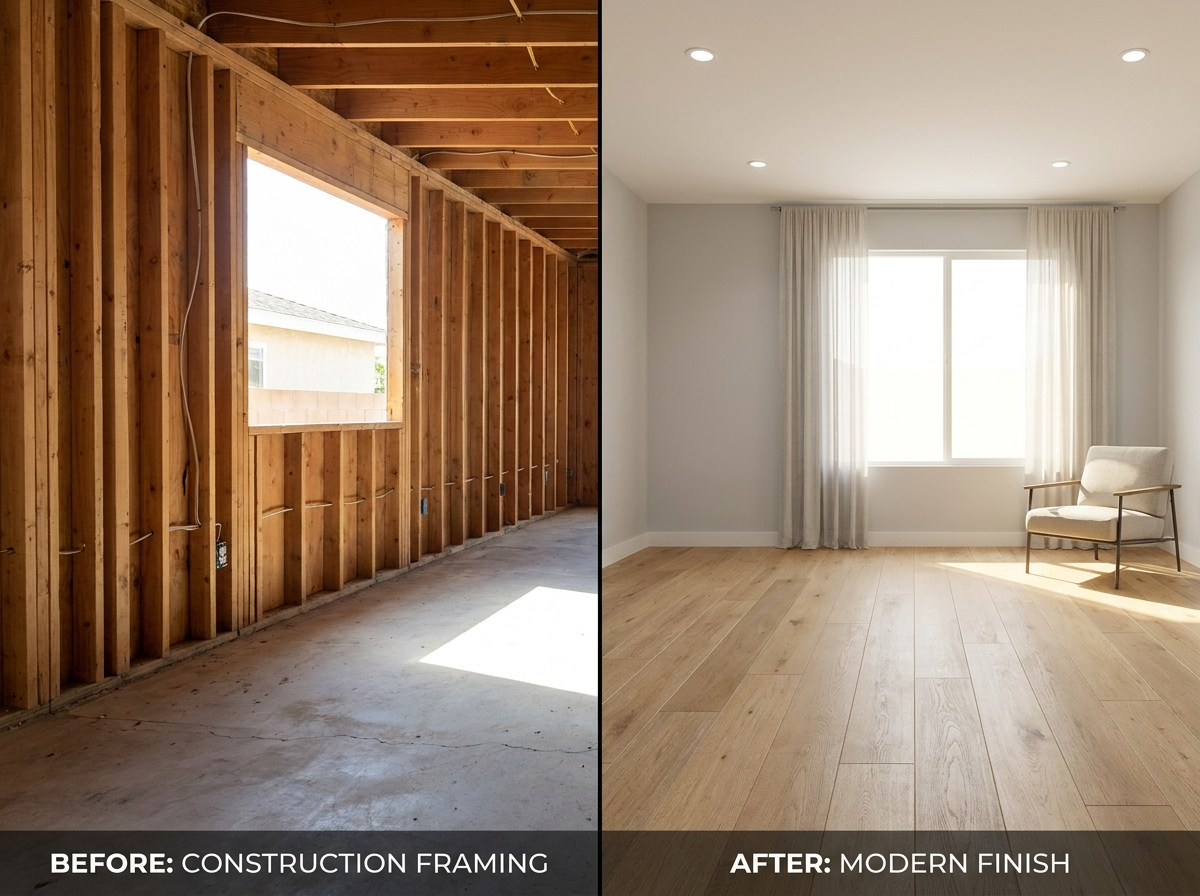
Unlike the DIF and FBA programs above, school fees are not limited to brand-new homes. The city’s Information Bulletin 146 defines a concept called assessable space: the square footage inside a residential structure’s exterior walls, excluding garages, carports, patios, decks, porches and detached accessory structures such as sheds or pool equipment rooms.
- School fees apply to new construction and to additions that increase assessable space.
- An addition that increases assessable space by 500 square feet or less is exempt from the school fee entirely.
- A detached ADU or junior ADU is also exempt if the assessable space it creates is under 500 square feet.
- The fee itself is set and collected by the applicable elementary, high school or unified school district, not by the city — the city only calculates and reports the chargeable square footage.
- If an entire structure is demolished and rebuilt, the fee is based on the new construction, and the district may issue a credit for the demolished space.
Because the per-square-foot rate is set district by district rather than citywide, Information Bulletin 146 does not publish one flat number. Homeowners near a school district boundary should ask their district directly, since two otherwise-identical additions can face different school fees depending on which side of a district line the lot falls on.
When and how these fees get paid
Development Impact Fees are paid in person to the city, by check, money order or cashier’s check made payable to the “City Treasurer,” and are generally due at the time the building permit is issued. School fees follow a parallel but separate process: the city calculates the chargeable assessable space on its Approval Report, the applicant pays the district directly, and a receipt or Certificate of Compliance from the district must be uploaded before the permit is issued.
For a phased project, DIF and FBA fees are generally assessed when the first phase’s permit is issued, with later phases adjusted if the final square footage changes. Because fee schedules are republished every fiscal year, a project that spans a fiscal-year boundary should confirm which year’s schedule applies to its permit.
Is a Development Impact Fee the same as a building permit fee?
No. A building permit fee pays for plan review and inspection of your specific project. A Development Impact Fee, Facilities Benefit Assessment or school fee pays for the shared public infrastructure, such as parks, fire stations, libraries, roads or schools, that a new home or added living space draws on. Most projects that add a dwelling unit or assessable square footage owe both types of fee, calculated separately.
Do I owe a Development Impact Fee for a home addition?
Usually not the citywide DIF or an FBA, since those are charged per new dwelling unit rather than per added square foot. An addition can still owe a school fee if it increases assessable space by more than 500 square feet, and it still owes the separate building permit and plan-check fees regardless of size.
What is a Facilities Benefit Assessment, and how is it different from a DIF?
A Facilities Benefit Assessment, or FBA, funds infrastructure for one specific planned community, such as Pacific Highlands Ranch or Carmel Valley, and was set when that community was first developed. The citywide DIF applies everywhere else. A parcel is charged under one program or the other based on its community planning area, not both for the same component.
Is a detached ADU exempt from these fees?
A detached ADU or junior ADU is exempt from the school fee if the assessable space it creates is under 500 square feet. Separate ADU-specific Development Impact Fee rules can still apply depending on the ADU’s size and whether it is income-restricted, so an ADU project should be checked against the current fee schedule on its own.
Who actually sets the school fee rate?
The applicable elementary, high school or unified school district sets and collects the school fee, not the City of San Diego. The city’s role is limited to calculating the assessable square footage and reporting it to the district on the project’s Approval Report.
When during the permit process are these fees due?
Development Impact Fees and Facilities Benefit Assessments are generally due when the building permit is issued, paid directly to the city. The school fee is paid to the district, and proof of payment must be uploaded to the project’s online permitting account before the city will issue the permit.
Do these fees change from year to year?
Yes. The city republishes its Development Services fee and deposit schedule by fiscal year, and the figures in this article reflect the Fiscal Year 2027 schedule published in 2026. A project permitted in a later fiscal year should confirm the then-current schedule rather than relying on these figures.
Budgeting for a new home or addition in San Diego?
Eco Home Builders handles design, engineering, permitting and construction for new homes, additions and whole-home remodels across San Diego and Orange County. Talk to our team before you finalize a budget, so impact fees, permit fees and construction costs are accounted for from the start.
Sources
- City of San Diego Development Services, Fiscal Year 2027 Fee and Deposit Schedule (Development Impact Fees, Facilities Benefit Assessments and Community DIF totals), published 2026.
- City of San Diego Development Services, Information Bulletin 146: School Fees, September 2026.
- City of San Diego Development Services, Fees.
- City of San Diego Development Services, Permits.
Figures above are third-party benchmarks published by the City of San Diego, not Eco Home Builders quotes, and are current as of the Fiscal Year 2027 schedule published in 2026. Fee schedules change annually; confirm the current fee for your parcel with San Diego Development Services before budgeting a project.